aIn one sentence
I want to know how neurons keep learning with only the signals they can reach: no backpropagation, no replay, one long stream of tasks.
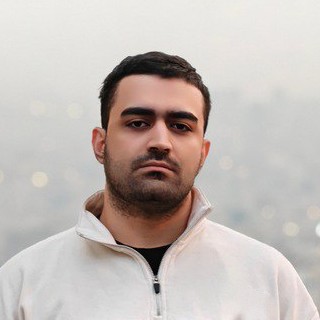
AI researcher in Tehran. I study how spiking neural networks learn, and I come from in vivo neuroscience. This page is laid out like a brain.
See the mapEach part of this page sits where its job sits in the brain. Pick a region to go there.
Prefrontal cortex plans and goals
Who I am and what I am looking for.
I want to know how neurons keep learning with only the signals they can reach: no backpropagation, no replay, one long stream of tasks.
MSc candidate in Artificial Intelligence and Robotics at Khatam University, Tehran. Coursework is complete; the thesis is due in early 2027.
BSc in cellular and molecular biology, then in vivo surgery and electrophysiology in two Tehran labs, in rodents and songbirds.
A PhD position in computational neuroscience or brain-inspired machine learning. Available from spring 2027, September 2027 at the latest.
Cerebellum learning from error
Two finished studies and the thesis in progress.
0 spikes per second, threshold 1.00
A leaky integrate-and-fire neuron. Raise the input, then switch homeostasis on: the threshold line moves until the firing rate returns to its set point. Fast cancels the change almost at once; slow lets the neuron respond first.
Pooled over four MuJoCo tasks. The interval for sign-sharing feedback is 0.87 to 1.03.
Write-ups and code are on GitHub or available on request.
Temporal lobe memory
From the surgery bench to the model.
At the Iranian National Center for Addiction Studies I did 200+ stereotaxic surgeries for research projects and trained new students, until COVID-19 closed the lab before my own dataset was finished. Later, at IPM in Tehran, I helped set up a songbird electrophysiology lab and implanted recording headstages in zebra finches.
I used the first closure to learn programming and worked as a backend developer on a national payment switch. Since 2024 I have studied artificial intelligence, taught machine learning as a teaching assistant, and built the computational side of my research. Every closure pushed me toward the work that could continue.
MSc, Artificial Intelligence and RoboticsKhatam University, 2024 to now
BSc, Cellular and Molecular BiologyIslamic Azad University, 2018 to 2023
Research assistant, in vivo electrophysiologyIPM, School of Cognitive Sciences, 2024 to 2025
Research assistant, surgery and behaviourNational Center for Addiction Studies, 2019 to 2020
Teaching assistantMachine Learning, then Statistical Pattern Recognition, Khatam University, 2024 to 2025
Backend developerAvreen Smart Solutions, 2021 to 2022
CEOVista Mehr, family company, 2020 to 2021
Neuromatch AcademyComputational Neuroscience 2024, NeuroAI 2025
Every role, course and skill in one document.
Download the CV (PDF)Occipital lobe vision
Built to order, for clients.
Alongside research I design and build websites: hand-built pages that load fast, read well on a phone and move the way this one did when it opened.
Client work stays private, so I show demos on request.
Ask for a demoBroca's area speech
For a PhD position, a project or a website.